A movement, for creators
Your work. Your terms. Your record.
AI was released on the world’s artists without asking. Faces were cloned, catalogs were swallowed, styles were strip-mined, and the people who made the work were told to be grateful for the exposure. That era runs on one trick: your work travels, and its history stays behind in someone else’s filing cabinet. There is no reason it has to. A work can be tracked. A credit can be carried. A consent can be a receipt instead of a rumor. This page is the disruption, stated plainly and shown case by case, from a Hollywood face to a sketch on a phone: stand up your node, make a Statement, and let the record carry what the platforms never would.
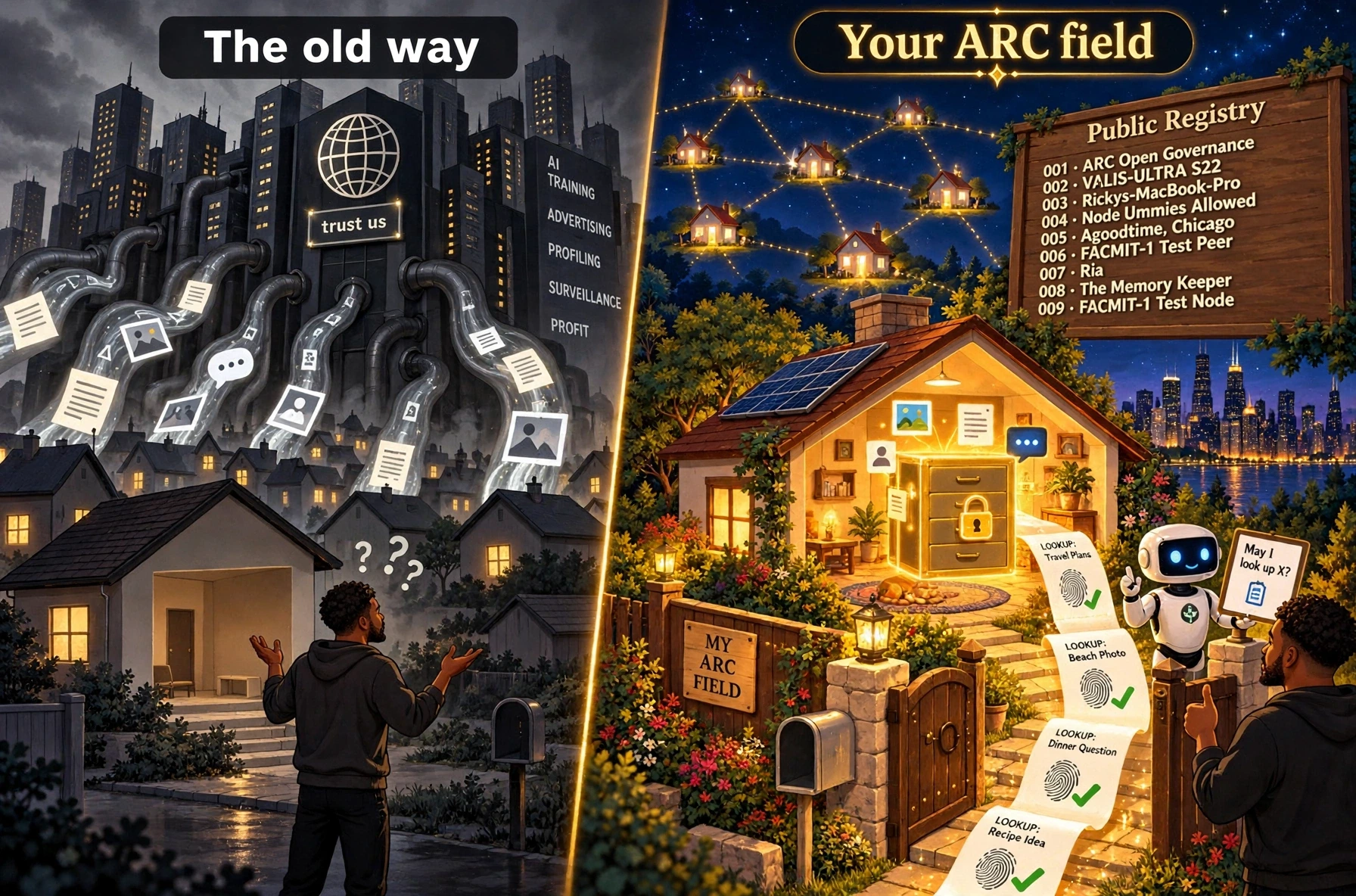
Proof in a flooded feed
When anything can be generated in a second, the scarce thing is a history that checks out. A work on ARC carries one, in the open, where a stranger can recompute it.
Clearance without the chase
Using someone’s work starts with an ask on the record and ends with a settlement anyone can read. No buried email threads, no handshake deals, no wondering what was agreed.
Splits nobody takes on faith
Who wrote what, and in what shares, stands as entries in a public credit record. A split is a fact a stranger can recompute, not a spreadsheet one side keeps.
A certificate that travels
A physical work carries a code that resolves to its record, so the object in the room and the record in ARC tell the same story to a buyer, a gallery, or an insurer.
Fans can check
Verification is not a backstage pass. A fan holding the public record can walk the same chains this page walks, without asking anyone’s permission.
One. the actor’s likeness and voice Design
Push it to the extreme. An actor’s face and voice are the work. Under the old way they are also the raw material: a scan taken for one production becomes a replica that auditions forever, in languages the actor does not speak, for products the actor would never touch, and the first the actor hears of it is a fan asking why they endorsed it. The ARC form of that career is one rule with no exceptions: no AI replica, and no training use, without a settled consent receipt. Consent is scoped to the use that was asked for. It expires. It can be revoked, and the revocation stands on the record beside the consent, so a replica working after revocation is not a misunderstanding. It is a documented act, provable by anyone holding the record.
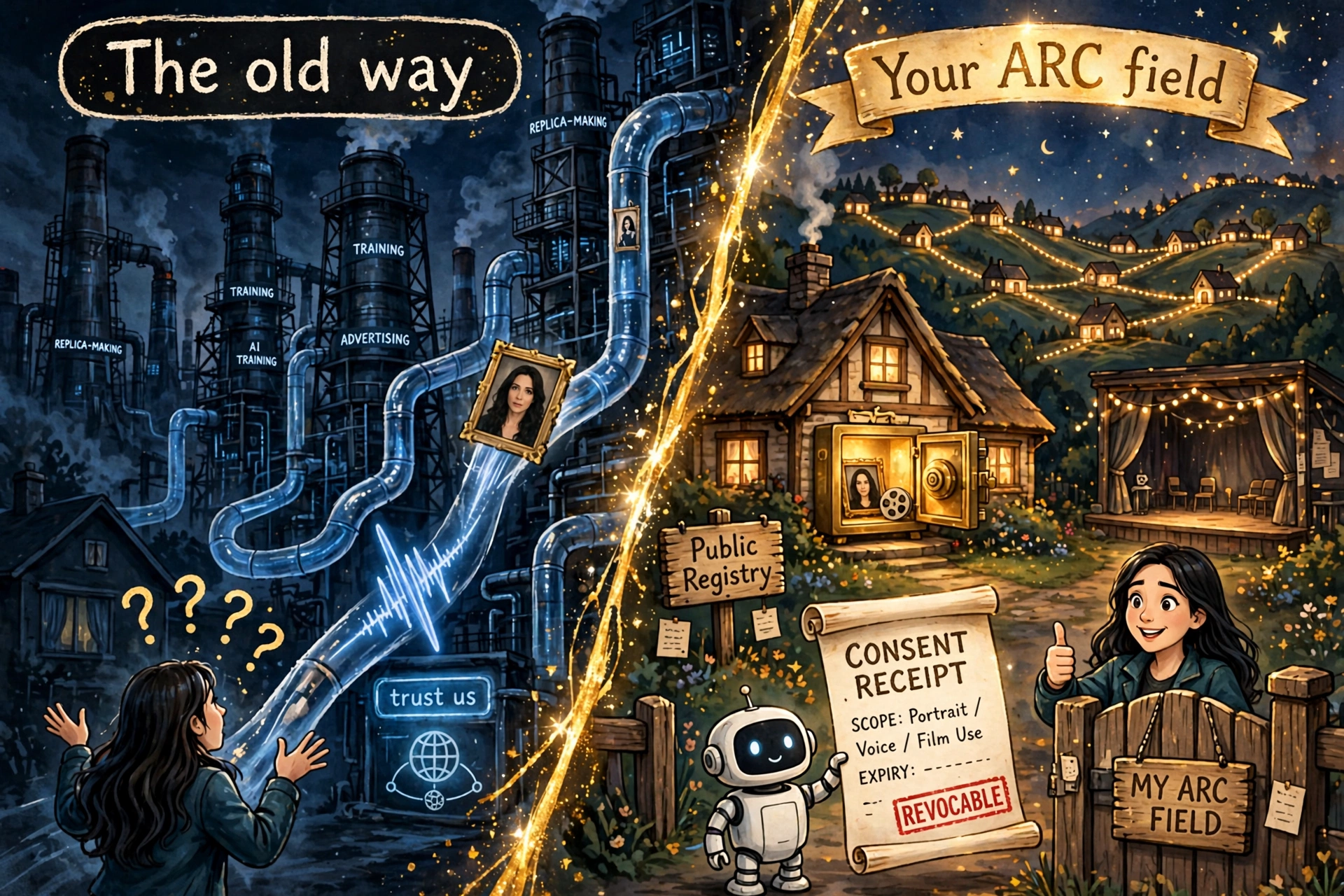
How the flow runs, as designed
The actor’s node holds the likeness and voice models the way the field holds everything else: behind the gate, in the Vault. The gate is a threshold, crossed only by the owner’s settled word. A production that wants a replica asks on the record, naming the use, the territory, and the term. The ask settles or it does not happen, and the settlement is the consent receipt: signed by the actor’s node, fingerprinted, and public in its existence even where its terms are held between the parties. When the term ends, the consent ends. When the actor revokes, the revocation is filed the same way, and every later use carries the burden of a record that says no.
Where this case stands. DESIGN, and the page grades it on its face. The governed gate and the receipt machinery underneath this flow are live: the action gate carried every operator send on this network on October 22, 2026, each one proposed, settled, released, executed, and receipted. The consent receipt for likeness and voice, scoped, expiring, and revocable as a carried artifact, is specified here and has not shipped. No actor has a consent receipt on this record yet, and this page will not pretend one does.
Two. the musician Staged
A track is not one thing. It is a release, a set of stems, a chain of samples, and a split among the people who wrote it, and the old way dissolves all four into a feed that remembers none of them. The ARC way keeps all four on the record. No artist has released a track this way yet, and this page will not invent one. What stands below is the road itself, leg by leg, with the strength of each leg printed beside it.
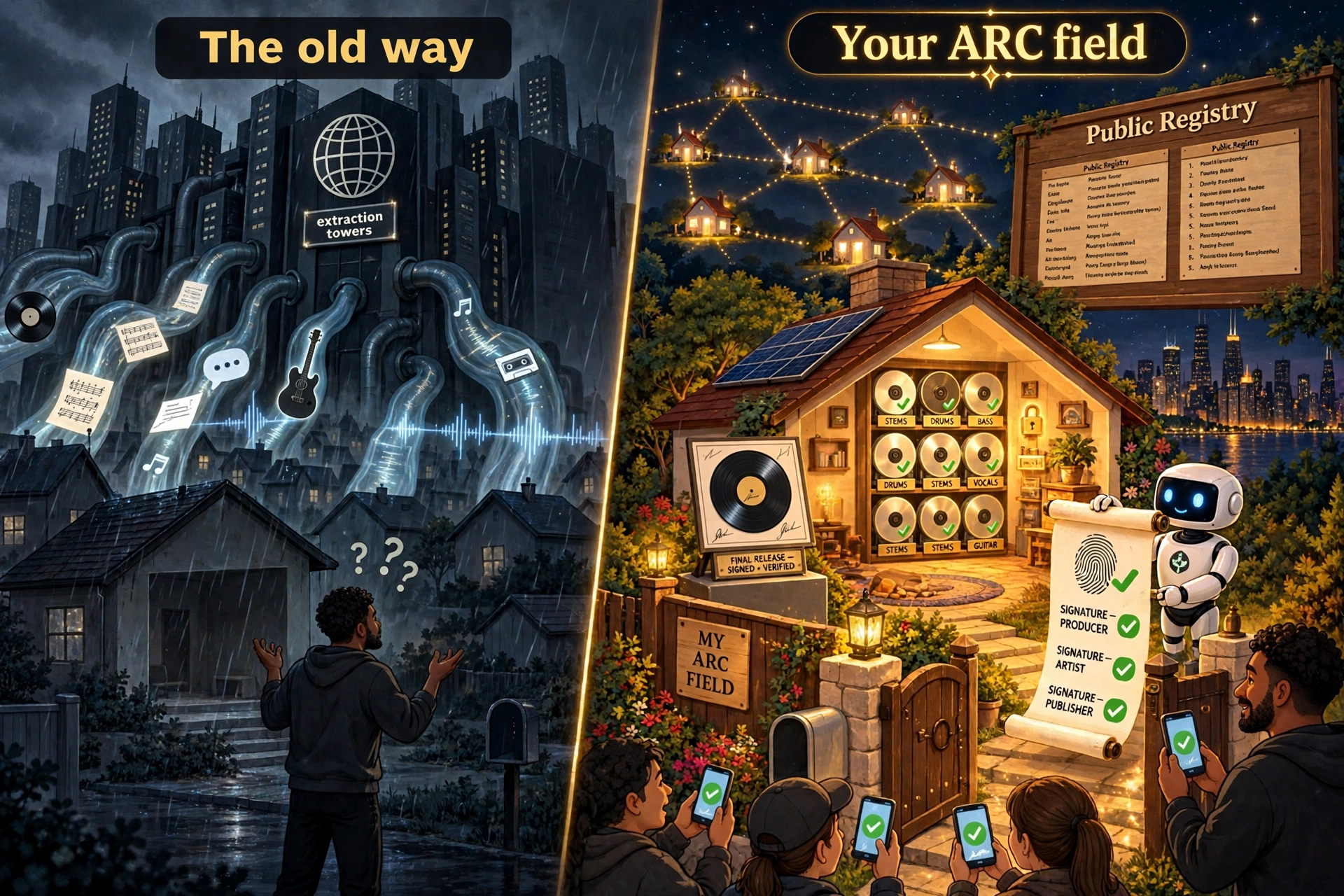
Leg one. release as a Statement
The artist’s own node signs the release and files it as a Statement on the public registry. The track’s fingerprint is bound to its maker’s name and key from the first moment, so the question of whose work it is never has to be argued from screenshots.
Where this leg stands. The machinery is live. Nodes file signed Statements that stand on the public registry today, each sealed into the registry checkpoint. No track has been released through it yet.
Leg two. governed access to the stems
The stems rest in the artist’s Vault. They are not a download link passed around. Access is a governed act: it is proposed, checked against the terms the artist set, allowed or refused, and receipted either way. Who holds the stems, and under what terms, is a matter of record rather than rumor.
Where this leg stands. The gate is live. The governed action gate carried every operator send on this network on October 22, 2026, each one proposed, settled, released, executed, and receipted. Stems as a governed asset class have not been carried through it yet.
Leg three. clearance as settlement
A producer who wants the sample asks on the record. The clearance settles under the artist’s stated terms, and the settlement itself joins the track’s history, where the next producer, the next label, and the artist’s own grandchildren can read exactly what was agreed.
Where this leg stands. Settlement is the network’s core act and runs today, the same chain the founding release demonstrates end to end on the Examine page. No sample clearance has settled yet.
Leg four. splits on the record
The writers and their shares stand as entries in the credit record, the same record that opened with the artwork in case three. When the track earns, the split that divides the earning is already public, already agreed, and already checkable by every party it pays.
Where this leg stands. The credit record is live and opened on October 22, 2026. It stands in simulation today and says so on its face, because no live arc account exists yet. No track splits stand on it yet.
Leg five. a fan checks it
Anyone holding the track can walk its chain from public data alone: the release, the access grants, the clearances, the splits, each link a fingerprint they can recompute with ordinary tools. Trust is replaced by arithmetic a fan can do on a phone.
Where this leg stands. The verification path is live, and case three below demonstrates it in full on a real work. The fan walk for a track waits only for the first track.
The first track to travel this road is in build as the second worked instance of the Provenance Chain demonstration in the five-demo program. When it lands, this section’s grade changes on its face, and not before.
Three. the visual artist, and the work that carries its chain Live
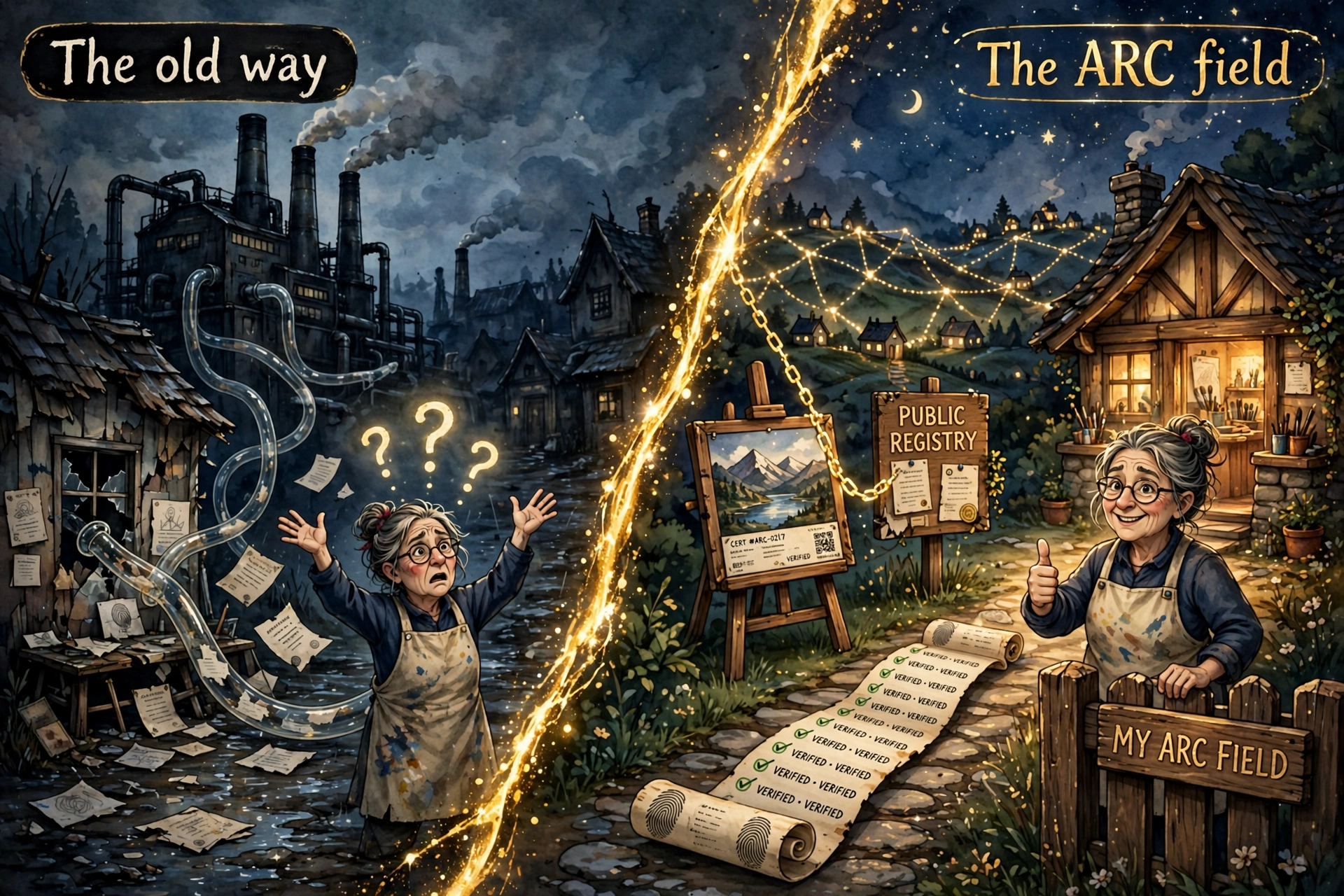
Marcus Yarbrough is a content creator, a founding member of this network, and the operator of Node 005. On October 22, 2026, artwork he drew went live at the head of the homepage, the illustration at the top of this page, and the network recognized it under its contribution recognition flow. The chain below is the whole recognition. Walk it the way a fan would.
Link one. the original
He drew the one-pager himself: the two panels, extraction towers against the sovereign home. It was received and filed on October 22, 2026, and it stands as the style standard the rendition was made from.
sha256 dd49aa02d55443d11c7c061dc9826b1a6df016b12822516efd0d76ea29ec54da
How to check this link. The original file stands in the foundation’s files and is not served on this site. This link is verified by its digest against the filed copy, which the foundation produces on request. The bound is printed here rather than smoothed over.
Link two. the rendition
The rendition was prepared from his original in the same grammar, approved as the campaign candidate at 1792 by 1184 pixels.
sha256 c449b4c34f9137b714e71a92e1f35e10d6b784fc0092125eb2af877ca0b11bd0
How to check this link. The rendition file is served on this site as hero-illustration.png. Download it and recompute its SHA-256 with any tool. It matches the figure printed here.
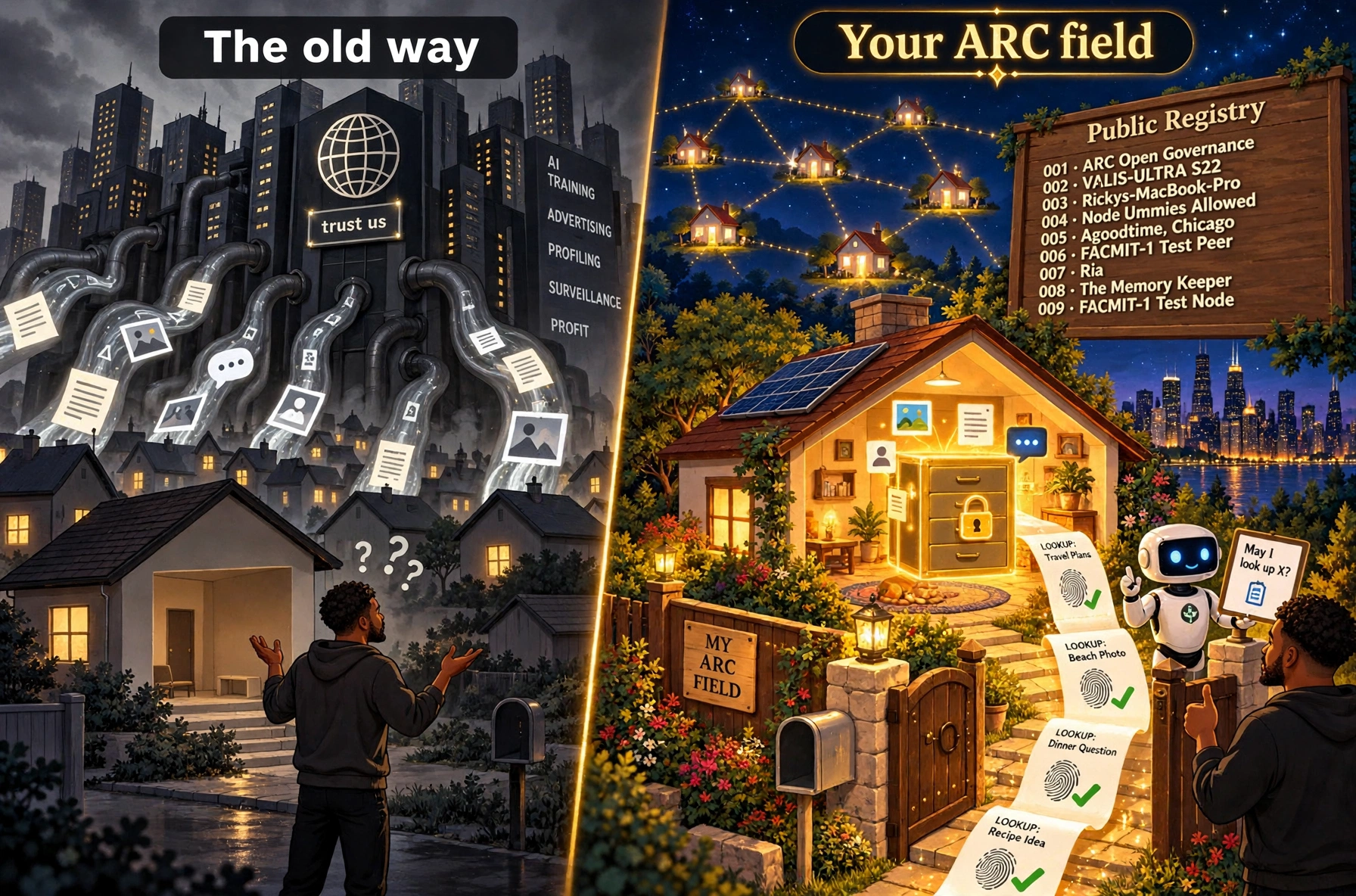
Link three. the shipped image
The image at the head of the homepage is a WebP of 611,628 bytes, prepared from the rendition for the served page.
sha256 649cf5d5107be131afbd43147ad7770275d3998168153decbb1ee92e2fee4910
How to check this link. Save the illustration at the head of the homepage, or the one at the top of this page, and recompute. The bytes served are the bytes named here.
Link four. the deployments that carried it
Three receipted publishing acts carried this work into production. Deployment 6ca8fe03-4637-474f-94b7-b75e537c1125 carried the hero live. Deployment 6049187a-d2e5-42b6-bb64-2b414d989534 swapped in the light WebP. Deployment 54dd03a2-a844-4cdd-80be-9f8d0ff5172b carried the credit itself, the caption on the homepage and the entry on his registry card, in one act.
How to check this link. His card on the registry names each deployment beside the link it carried, and the credit caption stands on the homepage figure where any reader can see it.
Link five. the credit on the record
The recognition stands as entry sequence 0 of the foundation simulation credit ledger, the first entry in that ledger’s chain, under the class the founder named: artwork in live production use by the network. Contributor Marcus Yarbrough, Node 005, record address arc:e67630fdeee1026bed9655bb521a97746af32c93c42488c699736e81bd8a8b1d.
ledger entry hash 5b913f0aa94662ffcf0db605b6297d451696496c6d34674a1969ed3b2fe92dcb
How to check this link. The ledger entry and his registry card name each other, so the walk runs in both directions. The ledger is labeled SIMULATION on its own face: no live arc account exists yet, and this entry moves nothing. The credit stands recorded now, in simulation, and live settlement is a later phase behind its gates. That bound is part of the recognition, not a footnote under it.
Not yet priced, and the record says why
The economics schedule prices a developer artifact, an application or tool a developer lists under its own signature. Artwork in live production use stands outside that definition, so no figure is recorded against this credit until the class is priced. The record declines to stretch a definition to reach a number, and says so where a visitor can read it.
Start the walk on his registry card
The physical certificate Open slot
A painting leaves the studio in a crate. What travels with it today is a paper certificate, and paper can be photocopied, separated from the work, or lost with the estate. The ARC form of that certificate is a signed record bound to the object itself. A code carried on the work resolves to its entry on the public registry, and scanning it walks the same chain this case just walked for a digital file: the maker and the making, the first sale as a settlement on the record, and every later hand the work passes through, each transfer settled in the open rather than reconstructed from invoices when it matters. For the person who makes physical things, the felt difference is simple. The object in the room and the record in ARC are the same story, and a buyer across the world can read that story before money moves, without calling the artist, the gallery, or us.
This frame is empty on purpose.
No physical artwork has been carried through this chain yet, and this page will not invent one. When the first physical work is carried through, its certificate, its code, and its chain will stand in this frame at exactly the strength the record carries.
Where the physical instance stands. The record side is live today: the registry, its signed checkpoint, and verification a stranger can recompute in place on a registry card. What is missing is the first object. Artists and galleries holding a physical work they want carried first can write to [email protected].
Four. the everyday artist Live machinery
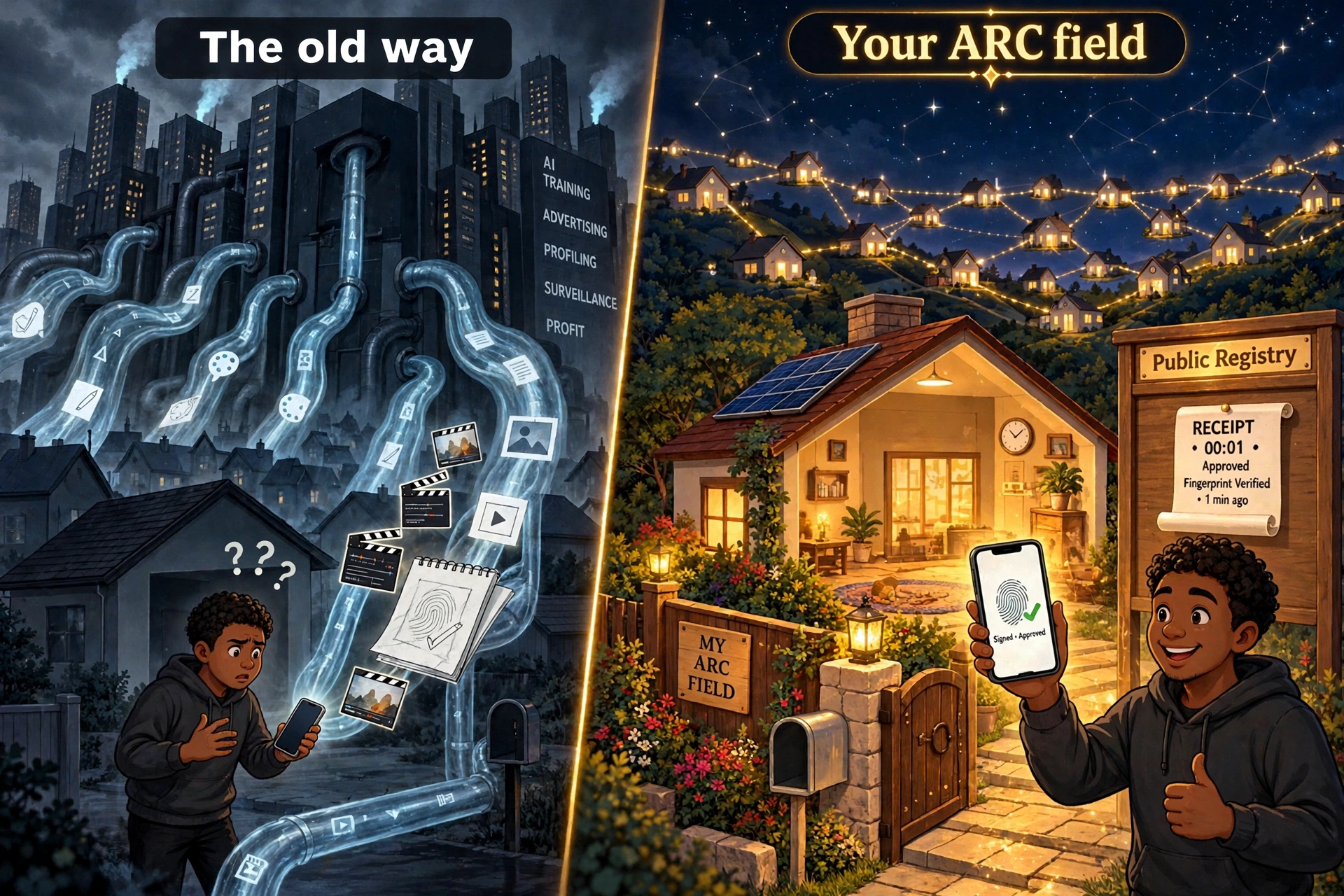
Most art is not made in Hollywood or in a studio with a crate. It is made on a phone, at a kitchen table, between shifts: a sketch, a chorus recorded in a closet, a photograph that deserves better than a feed that will strip its name by Tuesday. The movement does not ask that artist to become a label, a lawyer, or a node operator with a server rack. It asks for a phone and a minute. One Statement, signed by their own node, standing in the public record, carrying their name and the work’s fingerprint from the first moment it exists anywhere.
How the minute runs
The artist opens the app, stands up their node once, and files the work as a Statement. The filing is a signed act on the public registry, sealed into the registry checkpoint, and the artist walks away holding a receipt and a link that any stranger can open and recompute. From that minute on, the question of whose work it is has an answer that does not depend on a platform’s goodwill or a screenshot’s survival.
Where this case stands. The machinery is live. Signed Statements stand on the public registry today, filed by nodes and sealed into its checkpoint, and the phone-to-public-record flow is the Make a Statement demonstration in the five-demo program. The grade claims the machinery, not a crowd: the record of everyday artists filing their first work this way is the movement’s work ahead, and this page says so.
The extent, in one visit
Four cases, pushed to their extremes, at four different strengths, and the page has printed each strength on its face. An actor’s consent receipt, designed and not yet shipped. A musician’s road, every leg graded, waiting for its first track. A visual artist’s chain, live today and open above for anyone to recompute, with its physical frame honestly empty. An everyday artist’s machinery, live and waiting for the crowd it was built for. That spread is the honest state of a movement at its start: the record is real, the rails run, and the seats at the table are filled one artist at a time, by artists who decide their work will carry its own proof.
What holds a person’s place in all of this has a name. ARC is the architecture; the ARC Vault is the vessel’s hold, the personal container where an artist’s identity, memory, consents, and work are kept. The Vault does not store files; it preserves relations and their meaning under the owner’s law.
Stand up your node. Make a Statement. Your work, your terms, your record.